
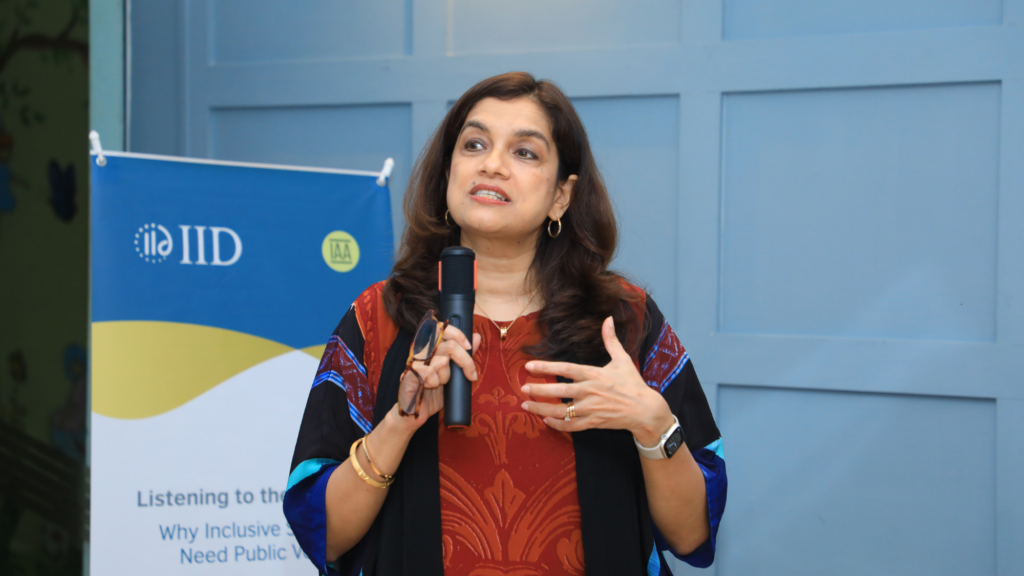
Inclusive systems cannot be built by institutions alone; they require listening carefully to people whose lives are shaped by those systems but whose voices are often left outside formal decision-making. This was the central theme of a reception and short talk titled “Listening to the Margins: Why Inclusive Systems Need Public Voice,” hosted by Institute for Informed Development (IID) in partnership with the Institute of Applied Anthropology (IAA) at Bagha Club, Gulshan 2, Dhaka.
The evening featured Professor James H. McDonald, an applied cultural anthropologist and Professor of Anthropology (retired) at the University of Montevallo, where he also served as Provost and Vice President for Academic Affairs. His scholarship has engaged with applied anthropology, political economy, globalization, rural development, inequality, security dynamics, and governance, particularly through long-term research in Mexico and Guatemala.
In his remarks, Professor McDonald reflected on how institutions often fail when they depend only on formal rules, expert language, or top-down systems, while missing how people experience those systems in everyday life. Drawing on themes also discussed during his podcast conversation with IID, he emphasized that people at the margins are not merely “beneficiaries” or “target groups”; they are knowledge holders whose lived experience can reveal where institutions are failing, where trust has broken down, and what kinds of reform may actually work.
He also underlined that governance becomes fragile when institutions lose the ability to hear people before frustration turns into protest, withdrawal, or resistance. The discussion connected his broader work on governance, marginality, and public narratives to current questions of inclusion, representation, and institutional responsiveness.
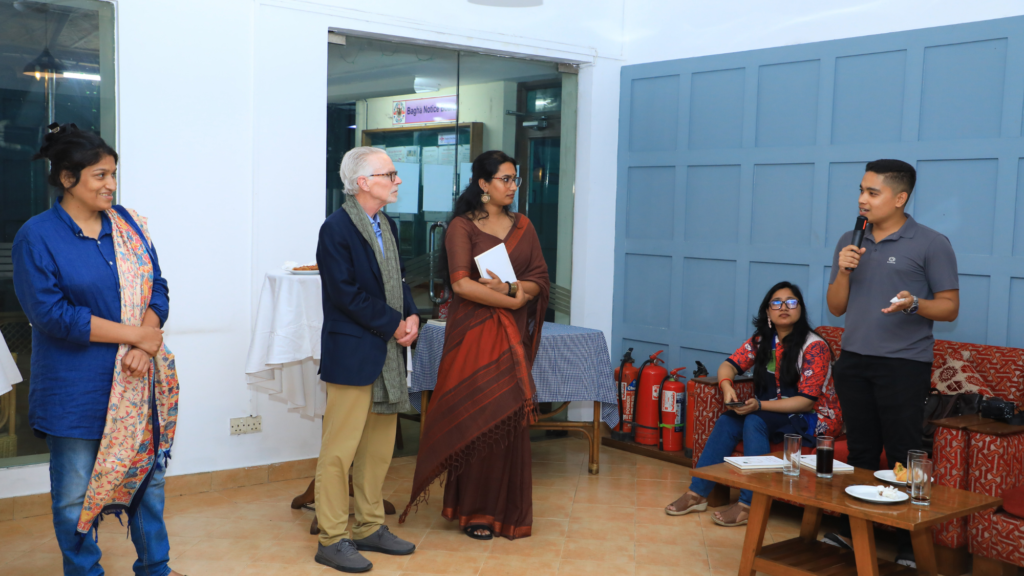
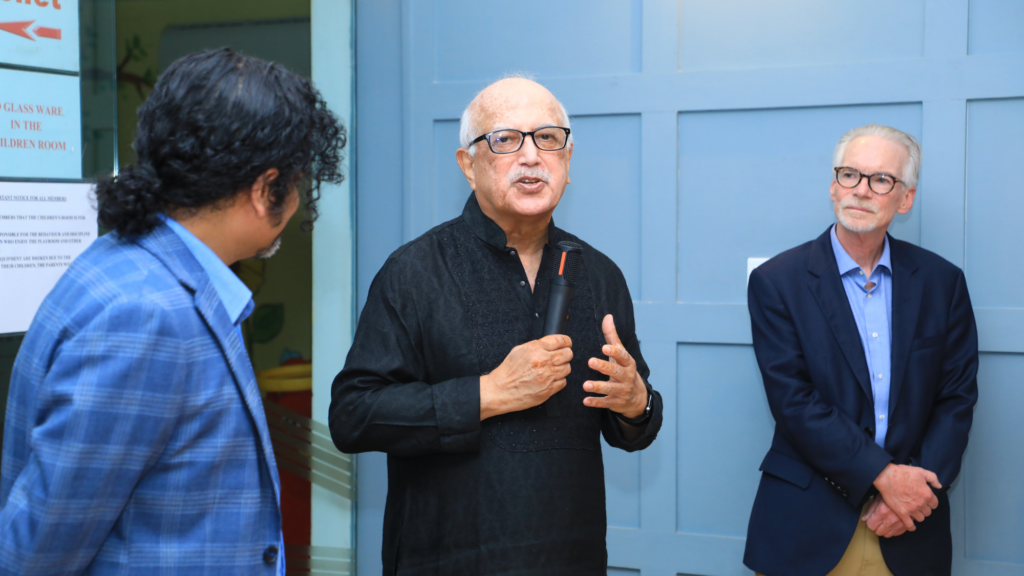
Professor Ahmed Mushtaque Raza Chowdhury, former Vice Chair of BRAC, founding Director of BRAC’s Research and Evaluation Division, founding Dean of the BRAC James P Grant School of Public Health, and Professor of Population and Family Health at Columbia University, shared reflections from BRAC’s own experience of listening to communities while developing large-scale social initiatives. He noted that many of BRAC’s most effective approaches were shaped not simply by institutional planning, but by sustained engagement with people living with poverty, exclusion, and limited access to services.
Professor Samia Huq, Dean of the School of General Education and Professor of Anthropology at BRAC University, and a member of IID’s Board, also spoke on why listening to marginal voices is essential for both knowledge and practice. She highlighted that anthropology reminds us to take people’s experiences seriously—not as anecdotes, but as evidence of how power, culture, and institutions operate in real life.
Speaking at the event, Syeed Ahamed, Founder and CEO of IID, reflected on Bangladesh’s recent experience, noting that political change often begins when institutions repeatedly fail to listen. He emphasized that the July Movement and the wider reform moment in Bangladesh show why youth voice, public trust, and inclusion cannot be treated as symbolic issues. When people feel unheard for too long, their demands eventually move from quiet frustration to public mobilization.
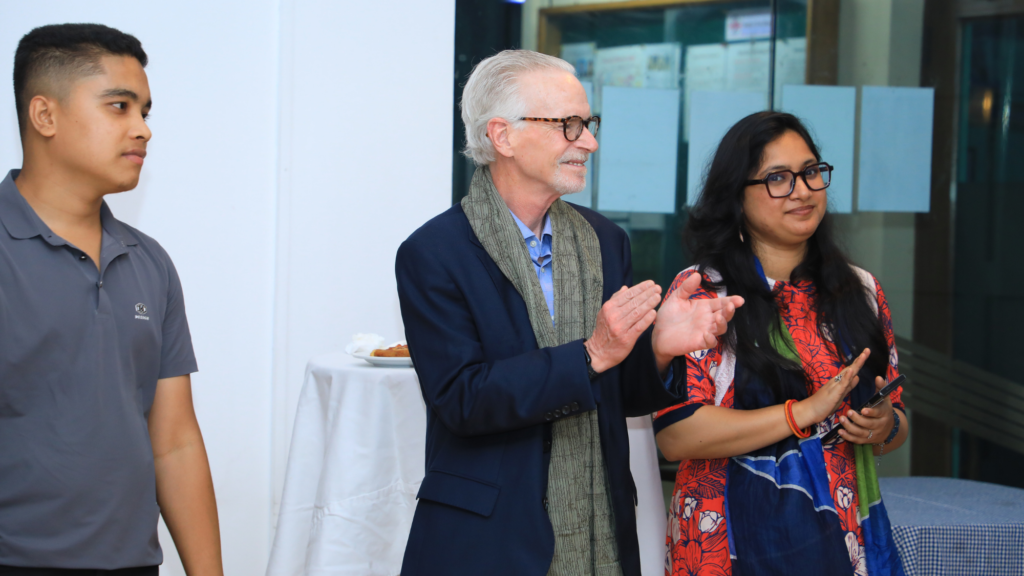
The reception that followed brought together academics, civil society actors, development practitioners, researchers, and policy professionals. The gathering created a lively space for exchange on anthropology, public voice, governance, youth engagement, and inclusive reform. Among others, guests included Reazul Hannan, politician and businessperson; KM Mijanur Rahman, President of ACOC; Additional Secretary Nafriza Shyama; Architect Noor e Jannat; Professor Bakhtiar Ahmed, Dean at Independent University, Bangladesh; and Dr. Morshed Hasan Swapan of icddr,b.
The event was jointly hosted by Syeed Ahamed and Professor AKM Mazharul Islam, reflecting IID and IAA’s shared interest in bringing applied anthropology, public policy, and civic engagement into closer conversation in Bangladesh.