Bangladesh is entering a high-stakes election–referendum moment shaped by the July Movement, where voters are being asked to decide not only on party competition but also on institutional reforms linked to the July Charter. A new nationwide public perception survey suggests many citizens intend to participate, yet large sections remain under-informed about the referendum and uncertain about what will happen after results are declared.
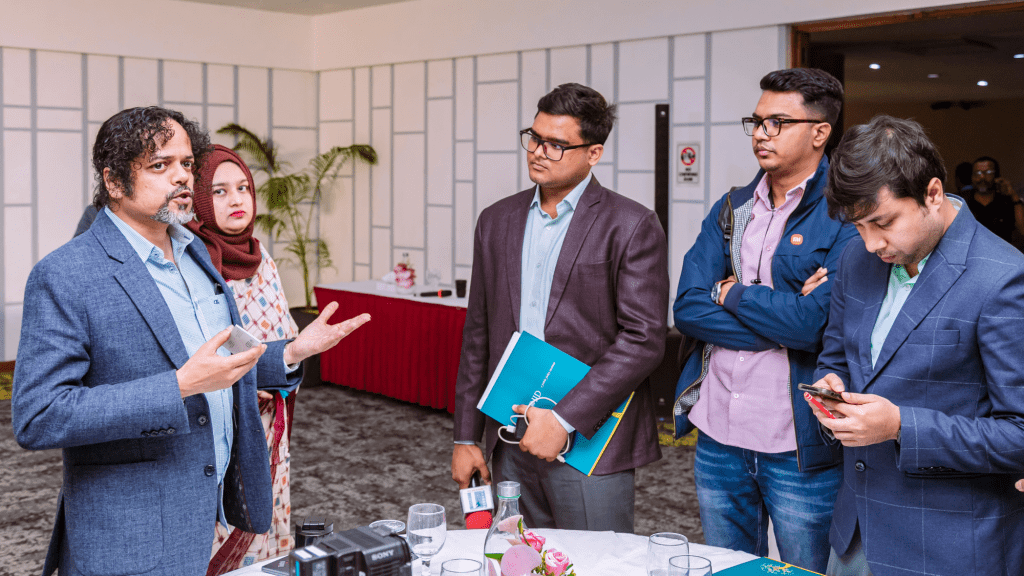
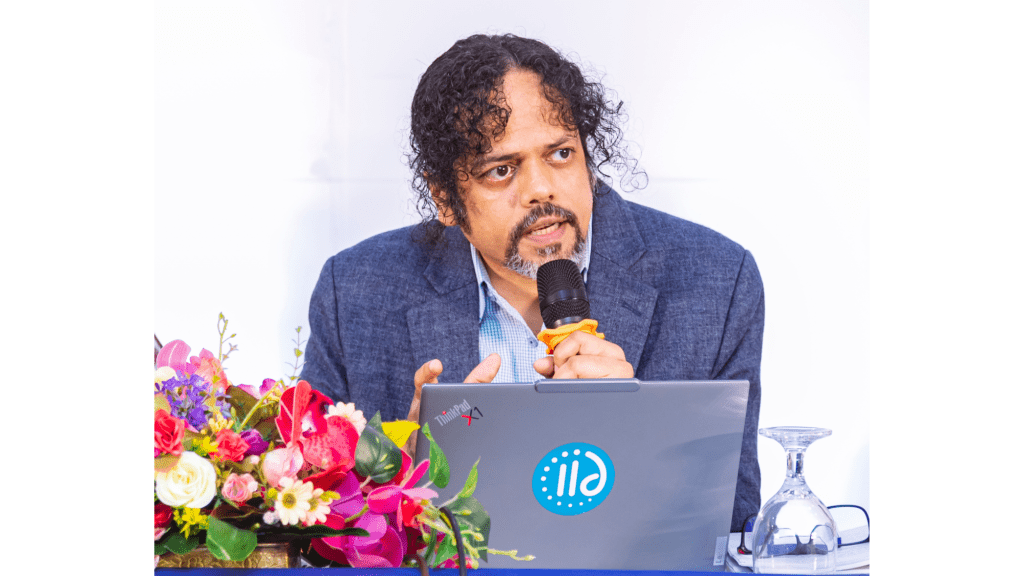
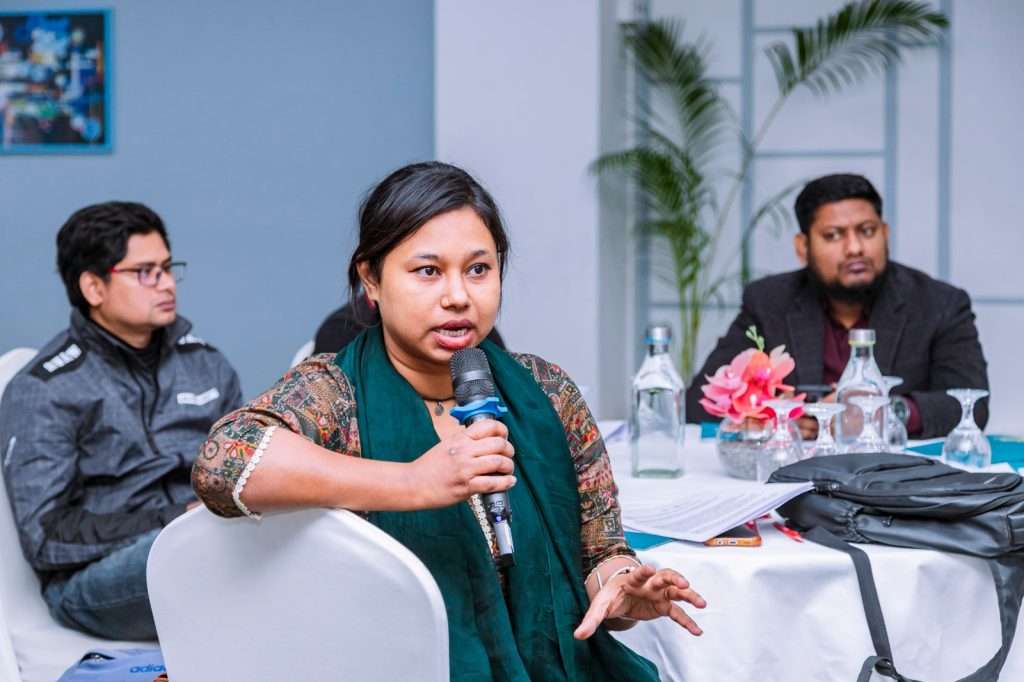
The findings were shared at a press briefing held on 10 February 2026 at the Pan Pacific Sonargaon Hotel in Dhaka, organised by the Institute of Informatics and Development (IID) and its youth platform, Youth for Policy (YfP). The briefing featured welcome remarks by Mariam Tasnim, Senior Joint Director, IID, key findings presented by Syeed Ahamed, CEO, IID, and the study context, objectives, and methodology presented by Sunjida Rahman, Head, Youth for Policy.
Survey at a glance
The survey was conducted as a non-partisan civic “pulse check” on whether citizens feel informed enough to make choices, included and safe enough to participate, and confident enough in democratic fairness to accept outcomes. Data were collected on 6–7 February 2026 from 9,892 eligible voters across all eight divisions, using a stratified coverage plan implemented by trained YfP volunteers.
Referendum design: one YES/NO covering multiple issues
The referendum ballot requires voters to choose YES or NO on a package that bundles several reform themes, linked to the July Charter and commission/reform proposals. The survey indicates a predictable risk: many voters have limited exposure to the referenced documents and therefore feel uncertain about what either outcome would mean in practice.
Informed: knowledge gaps are large and unequal
Nationally, only 37.2% say they know what is in the July Charter. The gap is sharp across population groups. Among voters aged 35+, just 23.2% say they know what is in the Charter, compared to 45.7% among voters aged 18–35. Rural respondents are also less likely to say they know (32.4%) than urban respondents (41.4%). Among voters with no formal education, only 8.4% report knowing what is in the Charter, while 77.2% say they do not know or are unsure.
Awareness is weak even on specific content. Only 43.1% say they know what changes are proposed on fundamental rights, while low awareness (no + don’t know) stands at 55.3% nationally and rises steeply among older and low-education respondents.
A key inclusion risk emerges at the ballot level. While 72.4% nationally say they can easily read and understand the referendum ballot text, this falls to 57.4% among voters aged 35+, and to 26.6% among voters with no formal education.
Many respondents also say they do not know what would happen if either side wins. For a “Yes” win, low awareness is 29.6% nationally, rising to 42.7% among voters aged 35+ and 62.2% among voters with no formal education. For a “No” win, low awareness is 33.6% nationally and rises to 47.8% among 35+ and 67.5% among no education voters.
Inclusive: unclear party positions and uneven civic space
When asked whether their preferred political party has signed the July Charter, 43.0% say “yes.” A large share say “don’t know” (37.4%), and 12.5% prefer not to answer. Uncertainty is highest among voters aged 35+ (48.3% “don’t know”), rural respondents (41.7%), and voters with no formal education (63.4%). This suggests many voters are being asked to decide on reforms without clear information about where their preferred side stands.
Civic space also appears uneven. While 63.0% say they can speak openly about elections, 20.2% say they cannot. The Adibasi/ethnic subgroup reports particularly constrained openness, with 46.7% saying they cannot speak openly.
Anxious: disruption fears and uncertain result acceptance
A majority (55.0%) believe election-day problems or insecurity could prevent people from voting. On post-poll stability, only 51.0% believe losing sides will accept election results fully or partially. Meanwhile, 35.8% are uncertain or unwilling to answer, with uncertainty particularly high among women and voters with no formal education—an “uncertainty zone” that could amplify contested narratives after results are declared.
Perceptions of government neutrality also show uncertainty. 47.9% say the government is neutral on voting, 11.3% say it is not, while 33.7% say they do not know (rising to 39.7% among women), and 7.1% prefer not to answer.
Hope: strong intent to participate and support for inclusion
Despite anxieties, the survey records strong participation hope. A combined 86.4% say they feel safe going to the polling station (64.0% “yes” + 22.4% “somewhat”). A combined 82.5% expect religious or ethnic minorities can vote without fear in their area (69.7% “yes” + 12.8% “somewhat”).
On women’s voting agency, 68.0% say women vote by their own judgement. At the same time, 21.1% believe women vote according to a husband’s or father’s preference, indicating household influence remains significant in many communities.
What the findings suggest
The survey points to a central challenge: reforms presented through a referendum may face legitimacy risks if large parts of the electorate—especially older, rural, and low-education voters—remain under-informed about what the July Charter contains and what a “Yes” or “No” outcome would mean. It also highlights that a bundled referendum question can create ambiguity, potentially fuelling post-election disputes if interpretations differ.
Where time does not allow full information parity, the minimum democratic standard becomes an election that is visibly safe, inclusive, and neutral—supported by effective prevention of intimidation and violence, and by accessible grievance and dispute-resolution pathways.
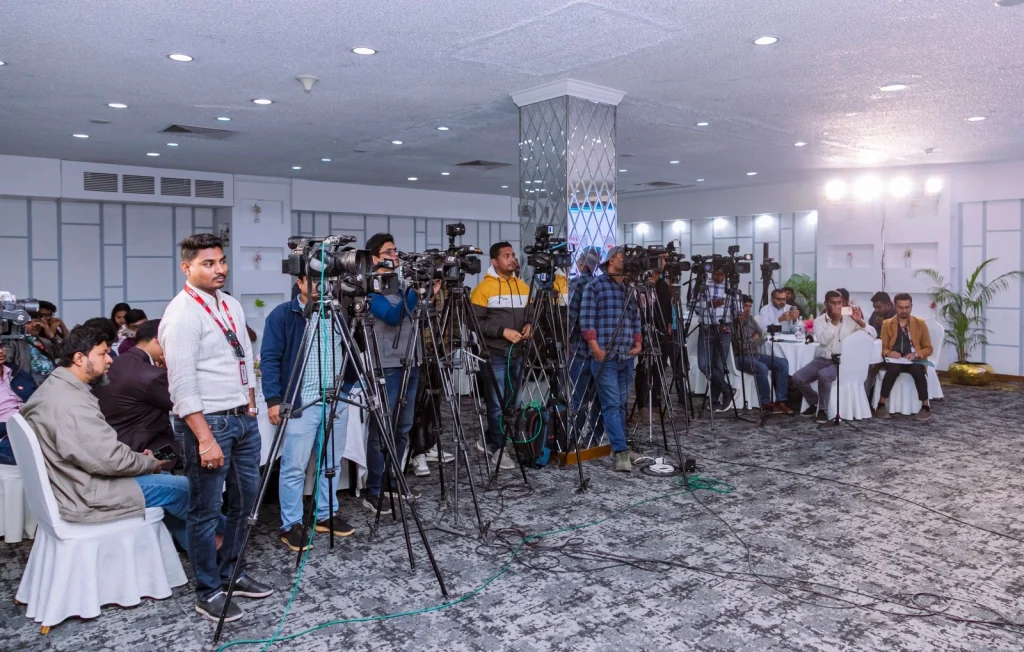
Journalists from leading print and electronic media outlets attended the briefing. Following the presentation, Syeed Ahamed responded to questions from journalists regarding the study and its implications.