
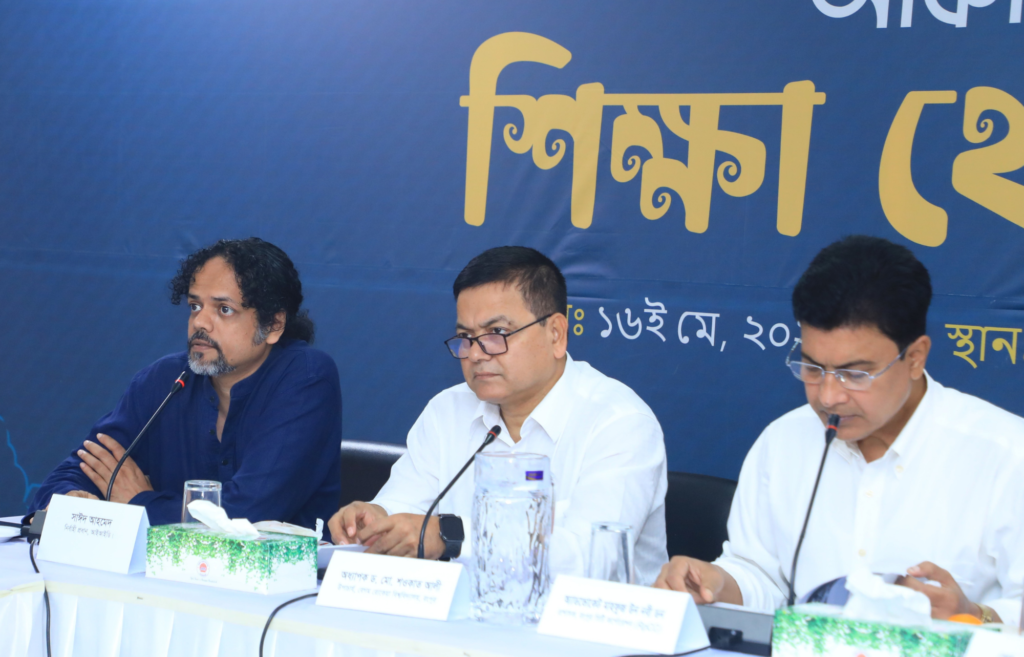
Education stakeholders in Rangpur called for stronger investment in learning outcomes, skills-based education, teacher development and inclusive access for marginalized communities at a regional consultation titled “Shikkha Theke Shombhabona”, held in Rangpur on 16 May 2026.
The consultation was jointly organized by the Institute for Informed Development (IID) and Youth for Policy (YfP), with support from local partner Udayan Swabalambi Sangstha. The event brought together policymakers, Members of Parliament, local government representatives, academics, teachers, youth leaders, civil society organizations and development practitioners to discuss education, skills development and employment priorities for Rangpur and the northern region.
At the consultation, Md. Rayhan Siraji, Member of Parliament, Rangpur-1, and Hafez Abdul Muntakim, Member of Parliament, Nilphamari-4, assured that issues related to education budget, allocation and local education challenges would be raised in the National Parliament.
Md. Rayhan Siraji said that while the country’s education rate has increased, unemployment has also continued to rise. He emphasized the need to establish schools and colleges for marginalized and char communities and to strengthen employment-oriented education. He also noted that education budgeting should be evidence-based, inclusive and ensure equitable distribution.
Hafez Abdul Muntakim shared his field-level experience and said that many students are able to recognize letters but still struggle to form words. He stressed that all stakeholders connected to education must play responsible roles from their respective positions to improve education quality.
Syeed Ahmed, CEO of IID, emphasized that going to school is not enough; learning must be ensured. He said that while enrolment and attendance have improved in Bangladesh, the key question now is whether children are actually learning—whether they can read, understand and do mathematics.
Sanjida Rahman, Senior Joint Director of IID and Head of Youth for Policy, presented findings from IID’s recent ICAN–ICAR research. She noted that although 95–100 percent of Grade 5 and Grade 8 children can read Bangla letters and words, only 38 percent of Grade 5 students could correctly answer questions after reading a story. She emphasized that children need not only word-reading ability, but also comprehension, analysis and application-based reading skills.
Advocate Mahfuz Un Nabi Don, Administrator of Rangpur City Corporation, said that textbooks for children should be simpler, more understandable and relevant to the present time. He emphasized the need to make education more practical so that the country’s population can be transformed into skilled human resources.
Academics from Begum Rokeya University also highlighted key structural challenges. Professor Dr. Md. Showkat Ali, Vice-Chancellor of Begum Rokeya University, pointed to teacher shortages and gaps in subject-based teacher recruitment, noting that in many schools, teachers are required to teach subjects outside their area of expertise. Professor Dr. Md. Ilias Pramanik highlighted the lack of joyful learning, computer labs and electricity in rural areas, and suggested mobile computer labs as a possible government-supported initiative.
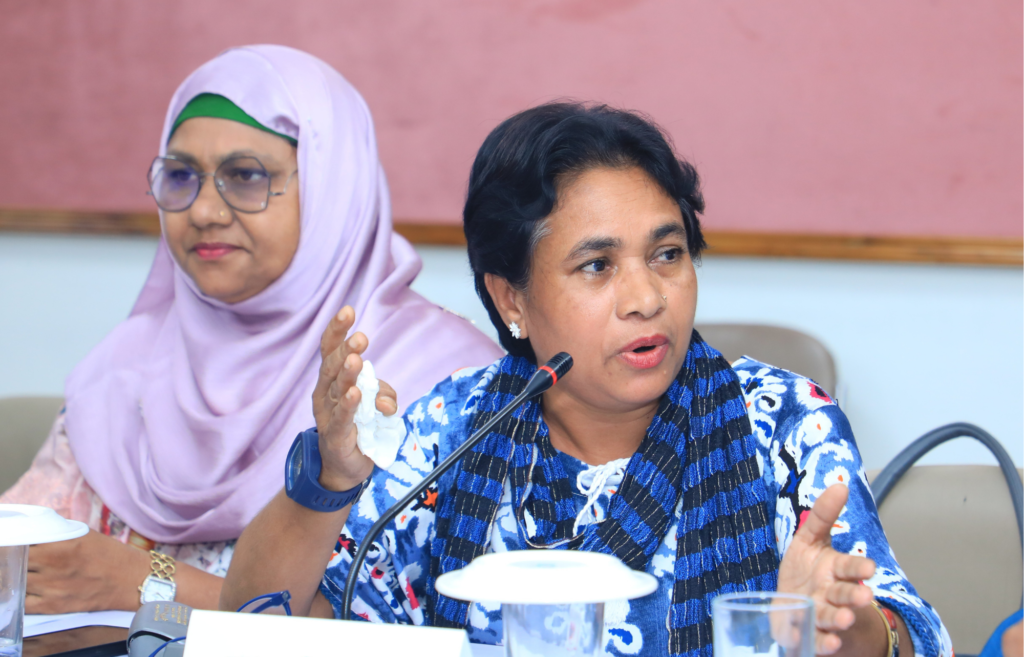
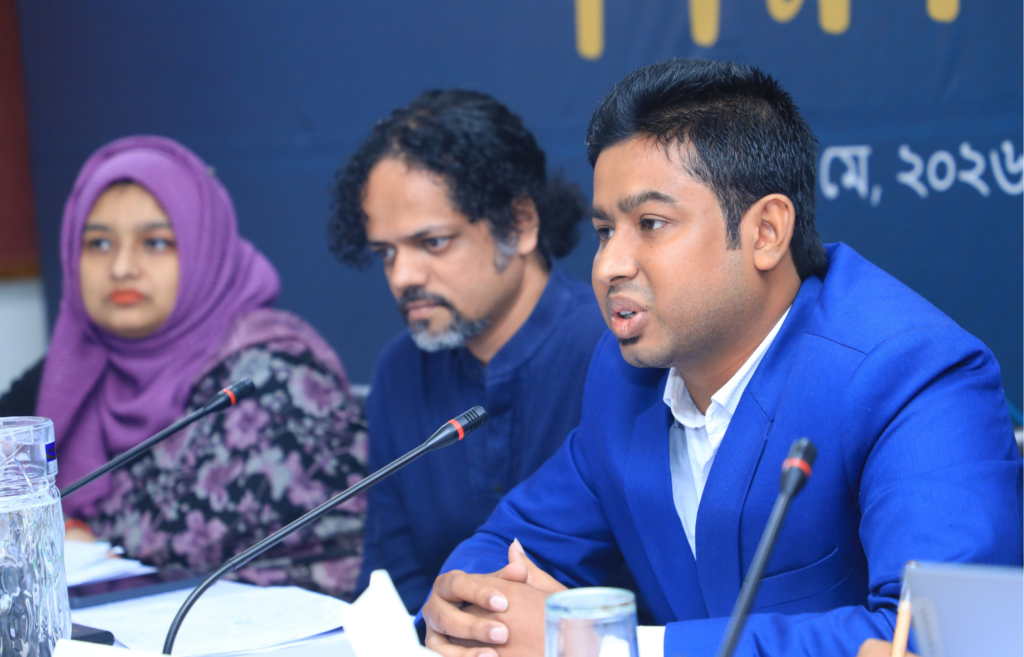
Other participants also emphasized the need for baseline assessments, child-centered evaluation, family-level counseling, visual learning materials, equitable services in grassroots areas, and stronger support for marginalized students. Perspectives were shared by academics including Farzana Jannat Tosi, Assistant Professor, Department of Statistics, Begum Rokeya University, and Dr. Md. Harun-or-Rashid, Associate Professor, Department of Chemistry, Begum Rokeya University; school-level representation came from Mosha Kohinur Akter Banu, teacher at Bharatkhali High School, Gaibandha; and civil society perspectives were shared by Md. Asaduzzaman Abir, Deputy Manager, Social Empowerment and Legal Protection (SELP), BRAC. Their remarks reflected concerns from higher education, school education, grassroots service delivery and community-based development work.
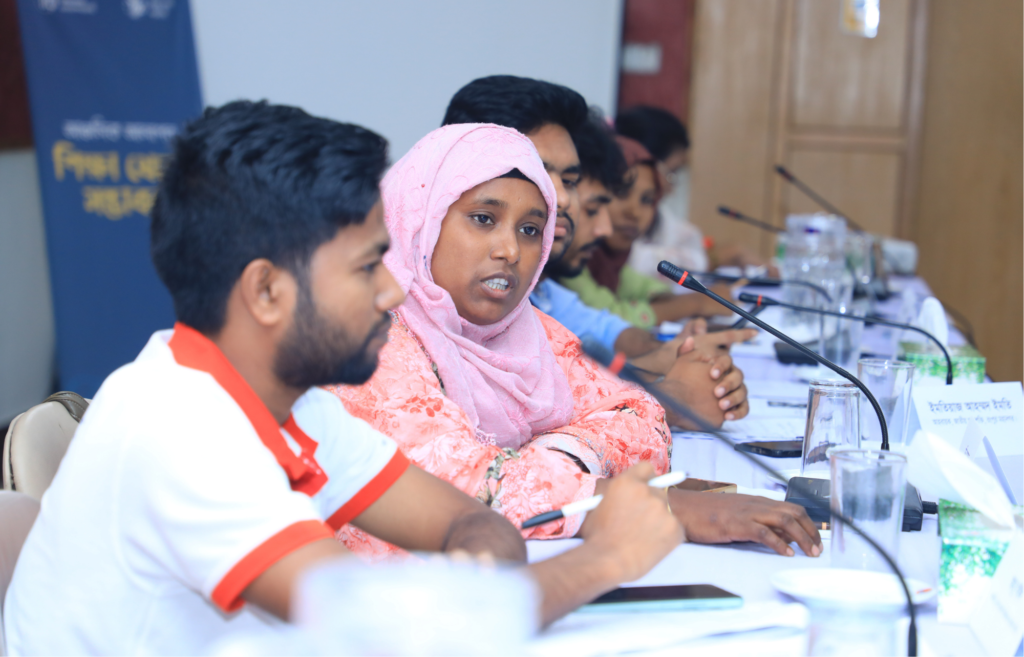
Youth representatives called for transforming the current knowledge-based education system into a skills-based one. Khokon Islam, Divisional Coordinator of Youth for Policy, said students should be prepared with practical life skills, employability and a clear understanding of future planning after graduation. Youth and student perspectives were also shared by Smriti Moni, volunteer of the Youth for Policy Gaibandha Committee; Tanzila Islam, member of the Youth for Policy Dinajpur Committee; and Imtiaz Ahmed Imti, Convener of Jatiyo Chhatra Shakti, Rangpur Metropolitan. Representing district-level youth networks, volunteer groups and student platforms, they highlighted social inequality in schools, gaps in teacher training and the need to make quality education accessible beyond those with financial privilege.
Throughout the discussion, participants from parliament, local government, universities, schools, civil society organizations, community-based organizations and youth networks stressed that ensuring school attendance alone is not enough. Children must be able to understand, analyze and apply what they learn in real life. They called for education planning and budgeting to be shaped by local realities, youth experiences and research evidence.
The consultation concluded with a shared call to prioritize education, skills development and employment in the national budget and in the post-2026 government agenda. Organizers noted that the key messages from the Rangpur regional consultation will be carried forward to national-level policy discussions to support a more inclusive, skills-oriented and future-ready education system.